
Secret #4: The Person Responsible for the Sale Is Often Carrying Far More Burden, Pressure, and Responsibility Than Others May Realize
When One Person Is Holding the Sale Together
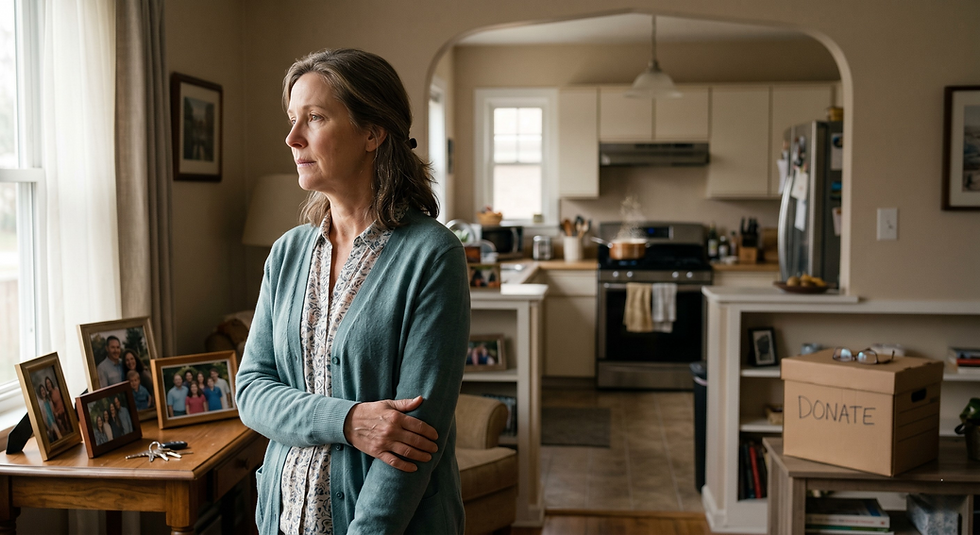
In many families, one person ends up carrying most of the responsibility for selling the home.
That person may be the trustee, the executor, an adult child, a surviving spouse, or someone who never expected to be placed in that role.
From the outside, others may see decisions about a house. But the person responsible is often holding much more. They may be carrying grief, family expectations, financial pressure, legal delays, property decisions, and the quiet burden of trying to do the right thing for everyone involved.
That is why selling a loved one’s home is rarely just a real estate transaction. For the person responsible, it can feel like carrying the house, the family, the memories, and the outcome all at once.
When the Person Responsible Is Also Grieving
When I first met Matt, his best friend of 30 years had recently passed away unexpectedly.
He was still mourning the loss of his best friend, and he told me he had never wanted to be the one responsible for selling the home. About a week before Kurt died, Kurt had told Matt he had named him trustee. Matt did not want the responsibility, but when Kurt died, that responsibility became real almost overnight.
This was not just a house to Matt.

Matt and Kurt had worked on the property together. They had shared years of friendship, projects, memories, and life. The home represented far more than real estate. It was part of Matt’s final connection to his friend. Kurt had left behind many expensive tools and equipment, Matt had to sell a skip loader, two newer cars, a school bus and other expensive tools that took time and effort.
He deeply missed Kurt and often found himself resenting the work required to sell the home, while at the same time feeling that loss with every task they had once shared.
That is why this sale carried so much weight.
The Reality Behind the Responsibility
At the same time, the situation surrounding the house was complicated.
• Kurt’s ex-wife was still living there
• A tenant was in the ADU
• A stepdaughter was part of the situation
• Kurt’s brother came in after Kurt’s death and removed valuable items
• Financial accounts were tied up with the IRS
• And the property needed significant work
For six months, Matt paid the mortgage, utilities, and expenses out of his own pocket just to keep things stable.
For two years, he worked on the house, partly because it needed it, but also because it helped him grieve.
And underneath all of it, there was something even harder.
Resentment.
Kurt had supported his brother financially for years. That had always been a sore spot for Matt. Now Matt was the one managing the outcome that would benefit that same brother.
At one point, there was a $6,500 termite repair.
At first, Matt resisted.
But when it became clear that not doing it would delay the sale, and that the money would ultimately affect what the brother received, he made the decision to move forward.
That moment wasn’t just about money.
It was about letting go.
Letting go of the house. Letting go of the role. Letting go of the final connection to his friend.
What This May Mean for You
If this situation feels familiar to you, here are a few things to recognize:
1. You May Be Carrying Far More Than Others Realize
Are you the one making decisions?
Handling paperwork?
Managing the property?
Dealing with family expectations?
Others may not fully see what you are holding.
But it’s real.
2. The Burden Is Not Just Practical. It’s Emotional.
Are you grieving at the same time you’re making decisions?
Are you dealing with old family dynamics?
Are you feeling pressure to “do everything right”?
This is not just a transaction.
It’s a deeply personal experience.
3. You May Be Taking On Financial Responsibility You Didn’t Expect
Are you covering costs temporarily?
Paying for maintenance or utilities?
Waiting to be reimbursed through the sale?
This is more common than people think, and often goes unrecognized.
4. The Process May Take Longer Than You Expected
Are there delays due to legal issues?
Repairs?
Family decisions?
What looks like “slow progress” may actually be part of the reality of the situation.
Sometimes what looks like delay in a sale is not just about the property, the repairs, or the market. It is about the person responsible carrying the full weight of the situation—grief, financial pressure, family expectations, and the responsibility to get everything right.
That is exactly what happened in Matt’s situation, where the trustee was also grieving the loss of his best friend while managing the sale. Click here to learn more about Matt's Story, Part 3: What Happens When You are Left in Charge of Handling the Estate?
5. You Don’t Have to Carry This Alone
Do you have support?
Do you have someone guiding the process?
Do you have someone who understands both the real estate and the emotional side?
Having the right support can make a significant difference.
In many situations, what feels like pressure or burden is also connected to something else—delay.
Delays in a sale are not always about the market or the condition of the home. They are often connected to the realities the person responsible is facing, including grief, financial strain, family dynamics, and the weight of making the right decisions.
To better understand how delays show up in these situations: Secret #3: Why Some Home Sales Take Longer Than Expected
Important Insight
The person responsible for the sale is often the one holding everything together.
When that burden is recognized by the family and by the professionals involved, the process becomes more realistic, more supportive, and far less overwhelming.
Closing Thought
When the weight of the responsibility is acknowledged, and the right support is in place, the person carrying the burden is far more able to move through the process with clarity, steadiness, and strength.
If You’re Facing This Situation
You do not have to carry the sale, the decisions, the family pressure, and the grief by yourself.
The right guidance can help you protect the process, reduce the burden, and move through the sale with steadier support.
If this sounds like your situation, you don’t have to figure it out on your own.
Free Book Download: Selling a Loved One’s Home
Selling a loved one’s home is not a traditional home sale. These sales often involve grief, unexpected delays, family conflict, legal questions, financial pressure, deferred maintenance, and difficult decisions no one feels prepared to make.
In her new book, Selling a Loved One’s Home, What to Know, What to Expect, How to Move Through the Heartbreak, Decisions and Details after a Death, Dr. Deena Stacer shares real stories based on real home sales to help you better understand what actually happens during these complicated transactions.
Through the Five Conditions and Seven Secrets frameworks, you will begin to understand why these sales can feel so overwhelming, what causes delays, and how families eventually move through the process to get the home sold.
If you are the person responsible for selling a loved one’s home, either now or in the future, this book was written for you.
About Dr. Deena Stacer
Dr. Deena helps families navigate the difficult process of selling a loved one’s home after death, during divorce, and through major life transitions in San Diego County.
With decades of real estate experience, advanced education in counseling and conflict resolution, and years of helping families through emotionally difficult situations, Dr. Deena understands that these sales are about far more than just the property.
They often involve grief, family dynamics, financial pressure, legal questions, delays, and overwhelming decisions that people never expected to face.
Through real stories, practical guidance, and her Five Conditions and Seven Secrets frameworks, Dr. Deena helps people better understand what is happening during the sale so they can make informed decisions and move through the process with less stress.
Her work focuses on helping the person left in charge feel more supported, more prepared, and less alone during one of the most difficult transitions of their life.
If you would like to talk through your situation with Dr. Deena Stacer, feel free to contact her directly or complete the consultation form on the Contact page.
Connect With Me
Dr Deena Stacer
This Doctor Makes House Calls
858-229-8072
Stacer Realty
CA DRE #00703471


Comments